
Are you seeking an educational approach that nurtures your child’s innate desire to learn and fosters independence, creativity, and a love for learning? Montessori at home may be the answer! This comprehensive guide will walk you through the essential steps to create a Montessori-inspired environment in your own home and introduce age-appropriate activities for your child’s development.
Key Takeaways
- Embrace the Montessori mindset at home to unlock potential and promote independence, creativity, and resilience.
- Create a Montessori-friendly environment with child-sized furniture and tools for hands-on learning experiences.
- As parents, observe children’s needs while encouraging autonomy through family routines and responsibilities.

Embracing the Montessori Mindset at Home
The Montessori philosophy, developed by Dr. Maria Montessori in the early 20th century, is based on the conviction that every child has the potential to achieve greatness when provided the opportunity to learn, make mistakes, and develop. It aims to help children achieve independence which, in return, leads to self-esteem and ultimately happiness. Incorporating Montessori principles in your home environment can activate your child’s innate learning inclination and help cultivate greater accountability and resilience while promoting creativity and exploration.
The Montessori Philosophy
The Montessori approach emphasizes child-led learning, independence, and respect for the child’s natural development. This approach seeks to guide the child towards independence and competence through a well-structured journey. It involves incorporating a variety of materials, from everyday household items to specially designed learning tools.
Children learn and gain knowledge by engaging with these materials and through genuine experiences, cultivating a hands-on learning environment that stimulates exploration and curiosity.
Benefits of Montessori at Home

Implementing concepts of Montessori in the home can have a profound impact on your child’s growth and development. For example, engaging in practical life activities such as personal hygiene, tidying up after meals, and caring for one’s belongings can extend beyond a child’s bedroom to other areas of the home. These activities not only encourage independence but also nurture a sense of responsibility and boost self-esteem.
Furthermore, Montessori-inspired activities for infants and toddlers, such as sensory exploration and motor skill development, can be easily introduced at home with the appropriate environment and materials. Creating a Montessori-friendly home provides a solid foundation for your child’s education, fostering a lifelong love for learning.
Creating a Montessori Home Setup Environment
A Montessori home setup environment is crucial in supporting your child’s development and independence. This involves:
- Creating designated, clutter-free spaces for learning and exploration.
- Ensuring that furniture and materials are accessible and engaging for children.
- Providing a prepared environment that supports their development.
- Allowing your child to learn at their own pace.
- Developing essential life skills.
Montessori Spaces: Living Room, Bedroom, and Beyond
To create Montessori-inspired spaces throughout your home, envision the living room, bedroom, kitchen, and bathroom as dynamic areas for learning, exploration, and growth. For instance, provide a designated Montessori playroom within your living room with a limited selection of toys on display. This approach promotes creativity and curiosity in a tidy and uncluttered environment.
In the child’s bedroom, opt for a floor bed instead of a crib, allowing your child to explore their room independently as they grow. Transform your kitchen into a Montessori-friendly area with child-sized furniture and tools, encouraging your child to participate in meal preparation and develop practical life skills. In the bathroom, provide age-appropriate step stools and faucet adapters to enable your child to access the sink and taps, promoting independence in self-care routines.
Establishing these spaces nurtures a Montessori environment where your child can thrive and cultivate crucial life skills, mirroring the principles upheld at Montessori schools.
Child-Sized Furniture and Tools
Investing in child-sized furniture and tools is a key aspect of creating a Montessori-friendly home environment. By providing furniture that is appropriate to your child’s height, you are enabling them to experience a sense of autonomy and authority over their environment, facilitating the development of gross motor skills and encouraging a feeling of belonging and ownership.
This encompasses items tailored for both school-aged children and younger ones, including:
- tables
- chairs
- shelves
- utensils
When selecting child-sized furniture, prioritize simplicity, safety, functionality, and independence. Affordable options for child-sized furniture made of natural materials can be found at retailers such as Ikea. Providing a home environment that is accessible and engaging for younger children sets the stage for a lifetime of learning and growth.
Montessori Activities for Different Age Groups

Ensuring your child’s growth involves offering age-appropriate Montessori activities that address their developmental needs. As your child progresses from infants and toddlers to preschoolers and elementary-aged children, Montessori activities can be customized to align with each stage of development. This tailored approach not only promotes independence, creativity, and a love for learning but also includes other age-appropriate activities that contribute to their holistic development.
Infants and Toddlers
For infants and toddlers, Montessori activities should promote exploration, motor skills, and independence. This can include arranging developmentally suitable toys and activities on low shelves and on a floor mat, incorporating a secure mirror at a child-friendly height for self-discovery, and using sensory blocks and stacking boxes to encourage exploration and cognitive development.
Introducing Montessori principles to your child’s early years lays the foundation for a lifetime of independent learning and growth. This not only contributes to a successful Montessori education but also integrates Montessori learning seamlessly into your child’s overall educational experience.
Preschoolers and Kindergarteners
As your child grows and enters the preschool and kindergarten years, Montessori activities should focus on fostering creativity, problem-solving, and practical life skills. This can include activities such as pegging work, practical life activities like pouring and sorting, sensorial activities to foster cognitive abilities, and child-led learning to encourage independence and curiosity.
Providing age-appropriate Montessori activities supports your child’s development and instills a love for learning that will carry them through their educational journey.
Elementary-Aged Children
For elementary-aged children, Montessori activities should support independent learning, responsibility, and community involvement. This can include engaging in practical life activities such as cooking and cleaning, washing dishes, participating in community service projects, and attending community meetings to foster a sense of values and social conscience.
Supporting your child’s Montessori journey at this stage nurtures their independence, fosters a sense of responsibility, and deepens their connection to the community
Fostering Creativity and Exploration with Montessori Materials
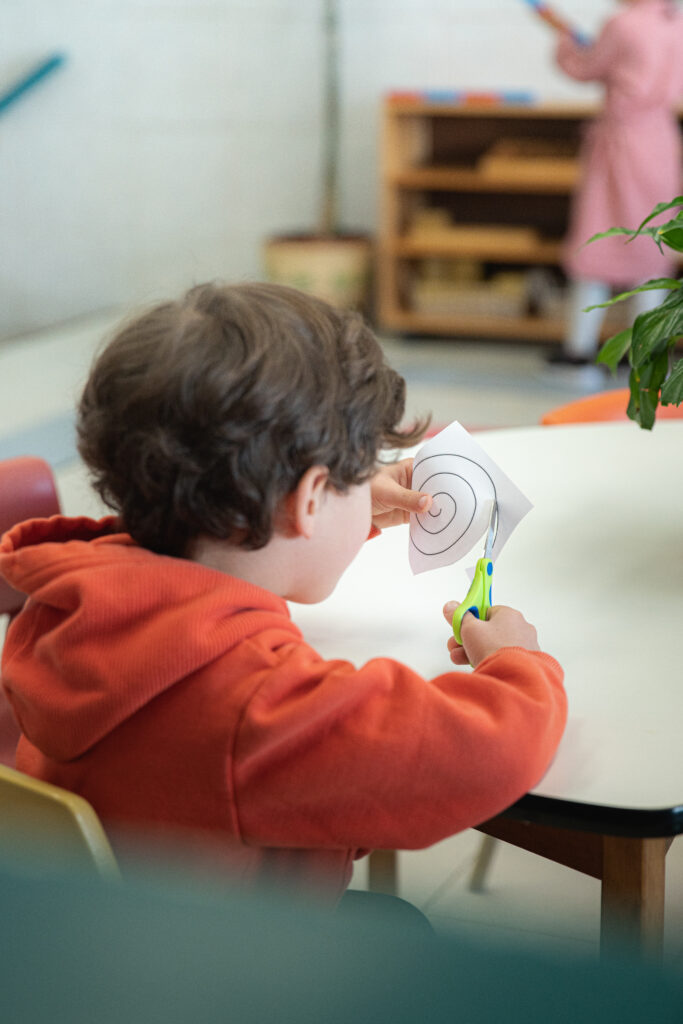
Choosing the right Montessori toys and materials is crucial for encouraging creativity, exploration, and hands-on learning, and Montessori materials play a pivotal role in facilitating hands-on learning by allowing children to explore, discover, and manipulate concrete materials. This approach contributes to a profound understanding of concepts, fostering a holistic and effective learning experience.
Selecting Montessori toys and materials that align with these principles gives your child the tools they need to develop essential cognitive and motor skills.
Selecting Montessori Toys
When choosing Montessori toys, opt for:
- Open-ended, educational, and non-electronic toys that align with Montessori principles.
- Toys that foster creativity, problem-solving, and independent thinking by allowing children to exercise their imagination and explore various options.
- Non-electronic toys that encourage hands-on learning and experiential learning, enabling children to interact with the materials and develop essential mental and physical skills.
Providing age-appropriate Montessori toys supports your child’s creativity and exploration.
DIY Montessori Materials
Creating your own Montessori materials at home can be an affordable and accessible way to provide your child with engaging and educational resources. With some creativity and ingenuity, you can craft Montessori-inspired activities using everyday household items and basic art supplies. There are numerous online resources and tutorials available to help you create DIY Montessori materials that align with your child’s interests and developmental needs.
Making your own Montessori materials personalizes your child’s learning experience and fosters a sense of ownership and pride in their accomplishments.
The Role of the Montessori Parent

As a Montessori parent, your role is to observe, guide, and encourage your child’s independence and responsibility. This involves striking a balance between allowing your child to explore and learn independently and providing guidance and support when necessary.
Understanding and implementing Montessori principles in your parenting promotes an environment that supports your child’s natural growth and learning. This approach creates a nurturing space where your child can thrive, develop essential skills, and cultivate a lifelong love for learning.
Observation and Guidance
Understanding how to build confidence in children is a fundamental aspect of Montessori parenting, emphasizing effective observation and guidance. By observing your child’s current interests and needs, you can tailor their environment and activities to suit their unique learning style. It is important to remain impartial and non-judgmental in your observations, focusing on your child’s progress and growth rather than comparisons to others.
When providing guidance, remember to respect your child’s autonomy, offering suggestions and support rather than dictating their actions. This approach nurtures a sense of self-confidence and self-motivation in your child.
Encouraging Independence and Responsibility
Fostering independence and responsibility in your child is a key aspect of Montessori parenting. By involving your child in daily tasks and allowing them to make choices, you instill a sense of autonomy, self-confidence, and accountability.
Whether it’s helping with meal preparation, tidying their room, or selecting their own outfit, providing opportunities for your child to contribute to the family and practice decision-making skills will lay the foundation for a lifetime of independence and responsibility.
Montessori-Inspired Family Routines and Rituals
Incorporating Montessori principles into your family routines and rituals can further support your child’s development and independence. By involving your child in meal planning, preparation, and clean-up, you encourage them to take an active role in their nutrition and well-being.
Assigning age-appropriate chores and responsibilities helps your child develop a sense of responsibility and contribution to the family unit.
Mealtime and Food Preparation
Involve your child in meal planning, preparation, and clean-up to promote independence and practical life skills. This can include tasks such as setting the table, washing fruits and vegetables, or helping to prepare a simple recipe.
Engaging your child in these activities not only teaches them valuable skills but also fosters a sense of accomplishment and self-sufficiency.
Chores and Household Responsibilities
Assign age-appropriate chores and responsibilities to your child, encouraging them to contribute to the family and develop a sense of responsibility. This can include tasks such as tidying their room, helping with laundry, or assisting with yard work.
Allowing your child to take on these responsibilities instills a sense of purpose and a strong work ethic that will serve them well throughout their lives.
Summary
In conclusion, implementing Montessori principles at home can have a profound impact on your child’s development, fostering independence, creativity, and a love for learning. Creating a Montessori-friendly home environment, involving your child in daily tasks and routines, and providing age-appropriate Montessori activities lays the foundation for a lifetime of learning and growth. Embrace the Montessori method at home and watch your child flourish!
Frequently Asked Questions
What is the meaning of Montessori at home?
Montessori at home is about creating an environment where your child can independently explore and learn with minimal parental intervention.
What is the best age to start the Montessori method at home?
For an optimal Montessori experience, the best age to start is around two and a half to three years of age. Schools generally accept children after their third birthday, so creating a Montessori home environment before then is ideal.
How to make a Montessori room at home?
To make a Montessori room at home, use child-sized furniture, simplify the space, organize and store things in an accessible way, include a working place and artwork, and provide age-appropriate toys and low shelving for storage.
What are some examples of Montessori activities for different age groups?
Examples of Montessori activities for different age groups include sensory exploration and motor skill development for infants and toddlers, problem-solving and practical life skills for preschoolers and kindergarteners, and independent learning and community involvement for elementary-aged children.
How can I encourage my child’s independence and responsibility?
Encourage independence and responsibility by involving your child in daily tasks and allowing them to experience the consequences of their decisions.

